22 May 2013

Intelligent design - the RSPB Minsmere nature reserve

We were recently invited to the UK by the RSPB to give a talk at their headquarter, the Lodge. In addition we had a small bird hide workshop and  visited a few of their reserves. The aim of our trip was also to look into the possibility of new bird hides that could cater to a diversified group of birders. That is both birders, birdwatchers (yes, there is a difference), bird photographers, sea watchers and more generally nature interested people. In our norwegian projects we have sought to make a series of bird hide types that will do just that. The idea is simple: you can't fit everyone in the same box. We are grateful to be invited to the UK to share knowledge and ideas. We returned to Norway much more inspired ourselves. As with many birding adventures, this one too turned out to be both more educational and inspirational then we expected!

On our recent trip we have been very fortunate to witness an important part of the future. No less! Everyone who pays a little attention to the state of nature knows that it is under an immense pressure from human development. Nature too often looses. A wide range of species are suffering from loss of habitat. Nature need us to be more clever.

Being an eager birder for many years I knew a fair bit of the work of bird conservation organization RSPB (The Royal Society for the Protection of Birds). Still, after seeing the dedication and detailed knowledge behind RSPB reserve projects, I am left with a very positive sense of peoples ability to produce niceness! They are in fact showing us the shape of things to come: It is the necessary making of concentrated and highly productive nature. It is man made eco systems. People have become very good at producing for consumption. This happens at the expense of nature, and we simply need to improve our skills and our ways of treating nature. Experiencing the RSPBs making of nature is an uplifting experience. It provides an insight into how we should start producing and manage nature. Simply put, we need nature intact, and we can make that happen! Literally.


Aerial of a part of the Minsmere nature reserve. Made by the RSPB. 


The front and the garage. For people and for nature.
Thanks to Mark Thomas at the RSPB hq and Adam Rowlands, Minsmere reserve manager, we stayed at a reserve cabin, and we got a tour of the reserve. It is great to see the wide variety of tasks the reserve team handles. From the business end to the massive job of managing the reserve. About 40 people man the reserve, and it serves a couple of hundred thousand people every year and bird wise it caters to a wide range of species and I don't know how many hundred thousands of birds. This is serious!

It seems when running a business, like the visitor centre (café, shop, etc) a job well is done is easily noticed. By good service, great food, a shop with things of use (bird books, optics, etc) and welcoming people. I am very impressed by the whole people-business enterprise. Then there are the things that is managed extremely well, but at first glance we don't take that much notice of it. Like the reserve nature. The amount of work behind such a rich reserve is enormous. It is only when seeing the big tools garage and see the fact that the habitats are man made and maintained, you realize that such a reserve is run like any farmer would run a big agricultural enterprise. This is the very clever making of nature, with detailed knowledge of species requirements, preferences, productivity and endlessly much more. Nature is easily taken for granted, but when birds are your clients they will let you know if you fail or succeed. Judging by the rich bird life of the Minsmere reserve, it is without a doubt a success. 


Bird city Minsmere - a densely inhabited place with a wide variety of species. In Norway the Black-tailed Godwits are very rare, in fact critically endangered. In Minsmere we saw many, and wide variety of other species.


Birders seemed to love the reserve too. 


Marsh Harrier and Swifts over the reed bed.

Going aerial - tools for birder architects


At our architectural office we often need aerial views of places we do projects. When putting up a bird hide you need to know where the birds are and which routes they fly in the landscape. Location is the number one thing to consider. No point in setting up a bird hide at place where you will not find birds. Good aerials helps in the understanding of the landscape and habitats, and in turn the movement of birds. But, most importantly, good aerials help explain a project to other people involved. To be better birder architects we have acquired our own quadrocopter, letting us do our own aerials. A great tool. We just had to bring it on our UK tour. When Adam at Minsmere asked us if we could do a series of aerials for the reserve we happily provided that.

A birds perspective of Minsmere - a varied habitat with something to offer for a wide range of species. The variety of water depths, plants, open and dense growth. This is both feeding-, breeding and resting grounds for a large number of species. And it is all designed that way. Intelligent design and nature in a very productive blend. The magnitude and detail of this man made bird city is striking. 

When looking at the aerials we took, some of the images remind me of those elaborate crop circles, typically featuring an extremely strict order and geometry. Often envisioned as proof of intelligent design, almost beyond earthly capabilities. That is the idea, it seems. However, one may also argue that someone simply had to much time on their hands. The first ´wow´ can very quickly turn into a ´why?` (when you realize that the first wow was the reason for making it in the first place). Seeing the Minsmere from above leaves me with the ´wow´ hanging around. I just love to see all the small ponds, edge zones and mixed habitats. It is a job that requires very detailed planning and management, with an extreme insight in the biology of a very wide variety of species. The Minsmere is actually proof of intelligent life, and it is full of life! It is production of nature and it is working very well! It is highly intelligent design. Not over designed, but made to let every singular part make its presence on its own terms. 

Ladies and gentlemen: we are making nature! Lets do much more of it!

The Minsmere reserve from above:


Birds, birders & bird hides
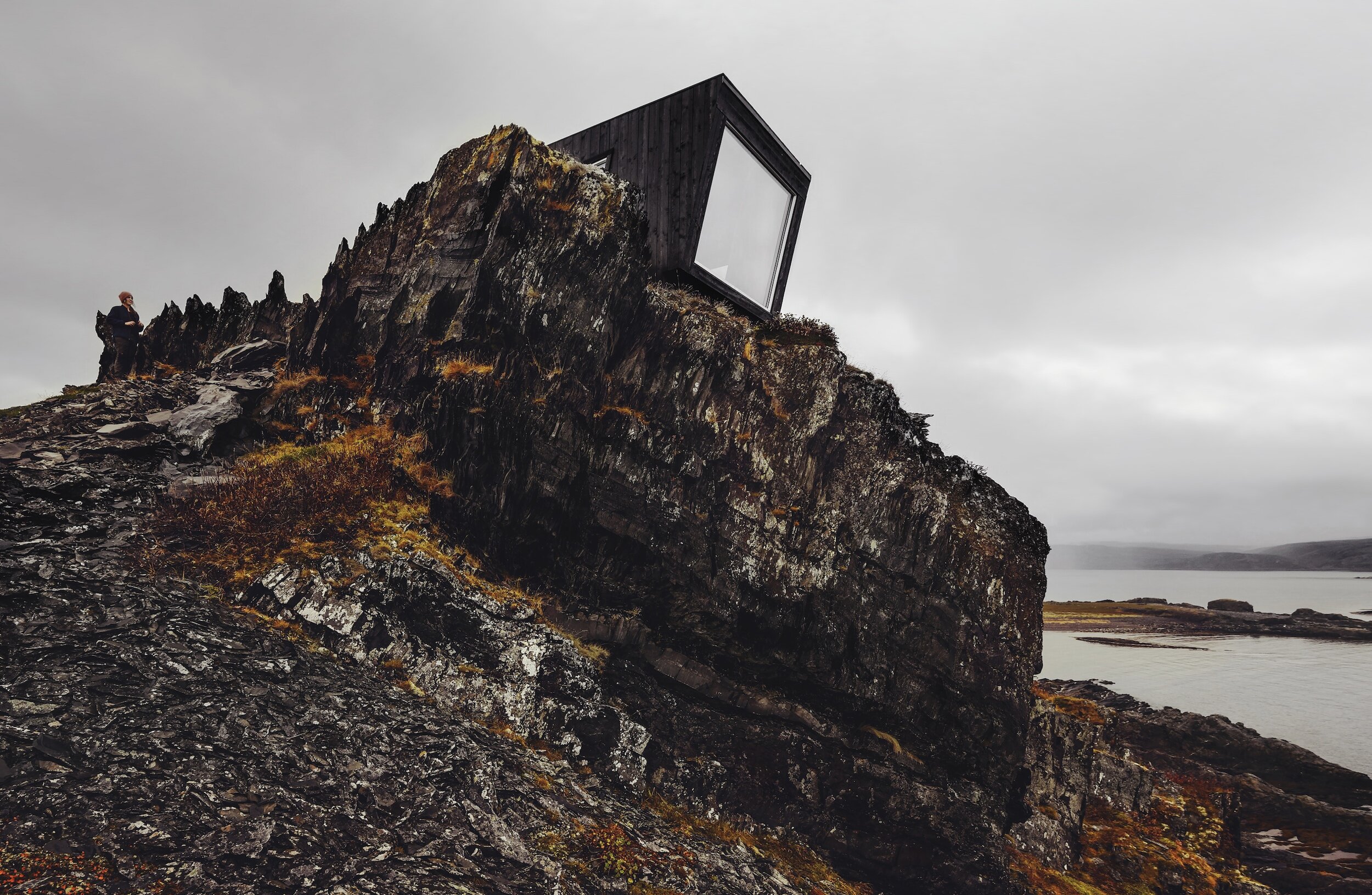
We were very interested in studying the birder architecture in the UK. In Norway it was the lack of a type of architecture dedicated to birders that sparked our idea of being birder architects in the first place. In Norway it seemed the very same type of sheds where used for every occasion. We felt something was lacking, and that by diversifying the architecture for birders we could greatly improve the birding and the experience of nature. So we set out to design new concepts and then meet with people who where interested in making new things happen: Like a wind shelter / sea watch hide at Steilnes in Vardø, and a floating photo hide dedicated to close up views of arctic sea ducks and the bird tower and outdoor amphitheater catering to tour groups and school kids in addition to birders. Things are improving in Norway. I must admit too, that after seeing a few places in the UK, that it seems a wider variety of hides could be beneficial to birders, birdwatchers and nature interested people in the UK. However, the fact that great numbers of bird hides are in place is without a doubt fantastic! Very often the box bird hide is a great solution, but other times different approaches should be taken. This subject is still very much open to exploration!


Box bird hide and open type box bird hide

From the bird hide: The Bearded Tit - a bird that have eluded me many times. It really became quite the issue on mine and Martin Garners recent ´Pushing the Boundaries Tour´. Wherever we went the Bearded Tits seemed to hiding from me. And we did visit several places where we were told ´you will definantely see it here´. Like in Dorset or in Cley or Titchwell. On this trip too the tits where hard to find. We visited several places where they should have been, before finally seeing these über cool birds at Minsmere. Thank you Minsmere, for fixing the Bearded Tit issue! Got some pretty cool views, but did not manage any photos to brag with. For me this was still a trip highlight. In addition to the Savi´s Warbler found by our friend from Gullfest 2013, Jonny Rankin! I was second man on that rarity that day. Thnx Jonny for finding this bird! Check out the encounter story on his bird blog extraordinaire. Birding is cool. 


Bearded Tit!!! A heavy crop, but still BT niceness. From the Island Mere bird hide.


We also saw loads of the very stylish Avocet and got close to the very loud Cetti´s Warbler.


The ultimate flying machine! Swifts are absolutely super stunning birds. Masters of flight - and very hard to photograph. 

The birders 
It was great meeting fellow birders and sharing ideas and inspiration. There are so many good stories to tell, and I am certain we will find time for them too. For now I would like to thank the very cool birders we met at the RSPB. Thanks Mark Thomas, Graham White, Graham Hirons, Adam Rowlands, Martin Davies and many other good people we met. Meeting Martin Garner again was of course nice as the RSPB hosted our ´Pushing the Boundaties talk´ at the Lodge lecture room. Thanks all birders and pro nature people we met on our UK tour!


Further explorations in architecture and nature:
I would like to make a proposal for an architectural contest, or in fact which ever profession is suited for the task, but this should concern architects! The RSPB have clearly shown us all how to make a ´bird city´. 
Now: who can design the most productive and ecologically sound built environment, with people as a part of it? How to make a living environment with a high number of people combined with the highest possible biodiversity? 
Could we even design urbanity with intact ecosystems catering to many species? 
How dense could we populate a rich and sound ecosystem, without degenerating it? 

For the record: Todays urban environment has loads of fast food stores,  and thus produces loads of pigeons. Yes they are birds too, but this does not count as proof of an ecologically sound environment. Even if you have some super cool Peregrines sat of top of that food chain. The key is species complexity and habitat variety. How cool would it not be to see that architectural contest?! I would definantely have the RSPB in that competition jury. 

We need to explore and figure out these things in a much more dedicated manner. The alternative is business a s usual, and that is obviously not working. 

Experiencing the Minsmere reserve is huge inspiration, and a very good reminder of the amazing pro nature work taking place today. Making nature: A few more Minsmere aerials to end this post.


We will be back. To be continued..

Tormod A. / Biotope

31 March 2013

Birds & people of Gullfest 2013 - Arctic niceness!

The Arctic bird festival Gullfest 2013 has just finished. This year it turned into an Eiderfest. With a lot of fish in the sea the gulls of Varanger was not so cooperative. The ringing scheme was less productive this year but the birding was still beyond amazing! Last year we "only" had flocks of 10s, maybe a few hundred eiders. This year Vardøs Bussesundet held massive rafts of King and Common Eiders. The King Eider safaris we ran to this area where soon named the ´King Eider Vortex´.  We are still working on the numbers of eiders, trying to get a relative presise count. The birds move around in large rafts and are not easily counted, but at least 10 000 King Eiders and 12 500 Common Eiders are resident in the waters around Vardø island, in addition to a few thousand Long-tailed Ducks. 

Gullfest 2013 was a great birding adventure! The people, the birds, the talks, the art and even the weather made this a very memorable event. With the following series of photos we hope to give you a glimpse of this years arctic birding highlight! We met old friends, made new ones, and enjoyed the great company of so many people from more then 10 nations. With the Taiga prologue and the North Varanger epilogue it has been a week of fantastic birding!


Varanger is a key wintering area for Steller´s Eider. We have seen them in hundreds, and been spoiled with magnificent views in both Kiberg harbour, next to Vardø and from the King Eider photo hide in Båtsfjord. 


The Gullfest base camp & Vardø Hotel

Gullfest started in Vardø with a massive polar front hitting Vardø with full force. The weather is best described as a minor mayhem in white. Very cool - we have to appreciate a little arctic influence. The first day of Gullfest basecamp had to be cancelled for the school classes, and on the second day we arranged the base camp at Vardø hotel, due to very heavy winds and blizzards. From Saturday the weather changed completely and we had the nicest sunniest days imaginable. 

The ringing proved much more difficult then last year, but thanks to the persistance of our 12 ringers from UK and Norway we got close views of both Glaucous Gull, Kittiwakes and maybe the highlight for most visitors and locals, several Purple Sandpipers. 

Gullfest birders at Vardø Hotel


The Gullfest base camp on Hasselnes was the main place to be in Vardø this past weekend. Great food and very cool birding from this Vardonian birding hotspot. The views of Hornøya bird cliff is fantastic. Chef at Vardø hotel and our very good helpers Bård and Siri served amazing food made on open fire in the Lavvo. Grand thanks to Norwegian Nature Inspectorate (Statens Naturoppsyn) for providing the Lavvo. This is nature and birding to the people! 


Hornøya bird cliff and more Vardonian birding

The bird cliff is one of the main attractions in Varanger. The above photo is taken from the base camp. We ran several trips every day to Hornøya thanks to the good guys at Vardø Havn KF. The bird cliff is home to more then 100 000 seabirds, of a wide variety of species. The most exceptional record from Hornøya during Gullfest was a Wren (gjerdesmett) seen by several of the Gullfest birders. This is a Finnmark County rarity, and one of less then 5 records in Finnmark. The finders forgot to mention this obervation. Who reports such a common bird?! But they told us all about the 8 Orcas seen north of the bird cliff, of course. 


Enjoying the sounds, sight and smell of the bird cliff. Brünnichs Guillemots are one of the target species for visiting birders. On Gullfest we had great views of all the six European alcids (Brünnichs Guillemot, Black Guillemot, Guillemot, Razorbill, Puffin and Little Auk).


The fishermans pelagic was made possible thanks to local fisherman and good guy Ole Klaudiussen. We spent about 3 hours at sea. The fishing itself was done within 15 minutes, and it stunned us to see three 20kg and two 5kg Cods being pulled up from the deep this fast. The birding is grand, and the fishing is impressive too. When we got back we served Cod livers to the gulls, and at the hotel they cooked our Cod for the Gullfest birders. Perfect.


Bird art, exhibition and talks

New this year was the Gullfest bird art exhibition. The two world class bird artists Ian Lewington and Darren Woodhead exibited a wide variety of their art. They both have very different styles, and they contribute massively to our understanding and appreciation of birds and nature. It has been a privilege to have them join the Gullfest 2013.

Ian is very well known by the birding community as perhaps the worlds finest bird illustrator. Dear I say, If you have not heard of Ian you are not a birder! He is about to release a new book about the rare birds of North America. Surely it will be one of the finest bird publications in years to come. He exhibited several of the plates at Gullfest. They are stunning! Needless to say we are big fans of his work. Ians work have inspired me for more then 20 years. Seeing more then 30 art pieces by Ian exhibited in Vardø was a huge highlight!

Darrens work is an amazing play with watercolor. Never before have I seen birds protrayed so lively and in one with their environment. His work is fine artistry and deep knowledge of birds combined. His in-the-field-only productions are spectacular! Seeing Darren work on Stellers Eiders in an arctic blizzard was great. His production in Varanger was very impressive, bringing out the large papers and colors on every possible occasion. We first met Darren on the Rutland Birdfair 2012. We realized that if we wanted to expand ours and others appreciation of Varangers bird life we just had to invite Darren. We are very glad we did!

The Gullfest bird art exhibition was made possible thanks to the financial support of Kulturstiftelsen Sparebank 1 Nord-Norge and Finnmark Fylkeskommune. Grand thanx to both for supporting this unique event! The exhibition was a key element of this years Gullfest, and it was enjoyed and admired by both locals and visiting birders alike. The exhibition was also part of a series of talks held for visiting school classes from Vestre Jakobselv, Vadsø and Vardø. 


Darren and Ians work was admired by all visitors to the exhibition. We were also very pleased to have 12 years old bird photographer Skjalg Helmer Vian join the exhibtion. He is without a doubt an up and coming young bird photographer in Varanger. He exhibited 15 photographs, in the exclusive company of world class artists.


2x left is Ians work, 2x right is Darrens work. 4 of the many paintings exhibited at Gullfest.

Ian gave a hugely inspiring talk about his work. The dedication and detailed knowledge amazed us all. Surely he is the Bruce Dickinson of the birding world!

The Gullfest talks 

The talks was both inspiring and enlightening. A wide variety of topics from Gull evolution, nature conservation and social media, crowd science and so much more. Every evening we had talks presenting cutting edge material from the birding world. Grand thanks to all the keynote speakers at Gullfest 2013! 

Martin Garner of Birdingfrontiers presented the latest news from Common Gull subspecies identification. In addition he gave an inspiring talk about following your passion at the Gullfest opening evening on North Pole pub. 

Tristan Reid aka the Inked Naturalist inspired us by sharing his passion for new and inventive conservation projects like the Tatzoo project. A colorfull contributor.

Arild Breistøl had assembled all Norwegian Glaoucous Gull ringing data, and presented the first ever analysis of this arctic gulls distribution and migration patterns. 

Arne Petter Sarre from the Norwegian Nature Inspectorate (Statens Naturoppsyn) gave us all new perspectives on the Varanger Peninsula National Park, which is his office as a nature warden / inspector. It was the insiders story of the wildlife of Varanger.

Jessie Barry from Cornell Lab of Ornithology gave a hugely inspiring presentation of the work she and her collegues at the Lab is doing. This is crowd science and bird conservation beautifully combined! 

Morten Helberg, who also headed the Gullfest ringing scheme, gave a talk on his work with Lesser Black-backed Gulls in Northern Norway. Another inspiring Gull talk!

Paul Roper of the North Thames Gull Group showed us all about gull ringing in the metropolis. More inspiring work by a group of very dedicated birders. Very different from Gulling in Varanger.

Kate Utsi of Destination Varanger talked about her life as a modern Samí girl, whose work is all about promoting Varangers nature. Roots and new insights combined in a very personal talk.

Cornelius Schlawe have studied gulls in all the regions of the Arctic. His detailed and very meticulous work impressed us all. This is work yet to be published and we all felt privileged and inspired by this cutting edge research. 

Peter Walton gave a talk on his 1980s adventure to the remote St.Lawrence island in the Behring Straight. A place with many similarities to Vardø island. Niceness from the other side of the Polar sea.

Johan Anders Andersen gave us all a new perspective on bird song in his performance of traditional Samí joik (song), featuring bird impressions and much more.

Ian Lewington gave us all a deeper understanding of his work as a bird illustrator. The detailed knowledge and dedication it takes is impressive.

Darren Woodhead inspired us with live painting and glimpses from his field craft and ability to portray birds in their environment.

All evenings ended with discussions in company of the Gullfest birders! A massive thanks to all speakers for educating us! 


Gullfest talks

The mobile bird festival

After a weekend in Vardø town we headed to Vadsø, Vestre Jakobselv and Nesseby. These inner parts of the Varanger Fjord have more spectacular birding sites and new adventures awaited us all, as Gullfest went mobile. A double-decker bus became our moving bird tower as we travelled along the fjord! Talk about birding in style. We had a very nice Reindeer lunch in Vadsø Fjordhotel, saw a very cool white-tailed Eagle and checked out their übercool feeder. After some birding on Vadsøya we headed towards Vestre Jakobselv Camping where their bird feeder holds many Arctic Redpolls. The ringers from UK set their mist nets up, and we could very soon study these arctic beauties in the hand. 

The King Eider photo hide in Båtsfjord was the expected highlight on this Gullfest trip around the Varanger Peninsula.

Ekkerøy was another stopover on our bus trip. Here we where seeking shelter from the arctic winds by WW2 bunker remains while scanning the sea for ducks and cetaceans. The bird cliff nearby holds 40 000 Kittiwakes. An impressive sight! 


The bird feeder at Vadsø Fjordhotel is without a doubt the coolest bird feeder in Varanger. Imagine Arctic Redpolls on Reindeer antlers! We saw lots of live Reindeer too, and a group of Moose in Austertana. 


In Vestre Jakobselv Finnmarkens jounalist joined us at the ringing scheme. Young birder / photographer Skjalg Helmer was interviewed and a couple of days later Gullfest featured in the newspaper: "Young birder meets the birding celebrities". Great headline. Cool article. 

The Gullfest epilogue

After a long-weeked with lots of people and great birding, we where a small group of birders left for the epilogue: birding the northern parts of the Varanger Peninsula. We drove through the Tana River Valley and over the high tundra to get to Båtsfjord for the floating King Eider hide experience.


The A-team of birding in Båtsfjord. Dressed properly and ready for a very unique birding experience!
In photo, from left to right: Anders F. Mæland, Jessie Barry, Tormod Amundsen, Martin Garner, Kate Utsi, Darren Woodhead, Tristan Reid and Ian Lewington. 


I think we can safely say that everyone was amazed by this experience. King Eiders, Steller´s Eiders, Common Eiders and Long-tailed Ducks all within iphone photo range! This photo hide redefines Eider photography. Check out the full story about bird guide and fisherman Ørjan Hansen and the photo hides of Båtsfjord.

Jessie Barry enjoying some very decent photo opportunities. 


Darren Woodhead getting familiar with King Eiders. They even ate ice from the sides of the photo hide! Birding beyond belief.

Diving Steller´s Eider male.  


Båtsfjord is the ultimate place to study plumage types of arctic seaducks. Young King Eiders above (1st. winter- & 1st. summer plumage). More articles to come on Biotope on this subject. We have collected a nice series of both Steller´s and King Eider plumage types.  


King of the cliff

The Gyrfalcon is one of the most impressive predators in the arctic. Hornøya bird cliff is one of the best places to see these birds in Varanger. In early spring they hunt Kittiwakes and Puffins at the bird cliff. Several birders saw the Hornøya Gyrs. We where also very fotunate to see two Gyrfalcons on the northern side of the Varanger peninsula too. We got very cool views of these powerfull birds. 

 Gyrfalcon


A group of very happy birders. We had some stunning views, and with my Iphone I managed to digiscope the above photo (right). Perhaps not a high quality photo, but how often do you see two Gyrfalcons and six Steller´s Eider in the same photo! 


Ian Lewington took the opportunity to do some field sketching.   


Thanks all!

Gullfest 2013 was an amazing experience! The birding was grand. Being in the arctic the numbers of Species is not high, but the species themselves are some of the coolest birds on the planet. Still, for us Gullfest organisers the people is what makes Gullfest great. Birding in the company of so many nice people is a fantastic experience. Meeting old friends and making new friends is much of what Gullfest is about. We are privileged to be able to make this event, and to have so many locals and visitors coming together to celebrate and enjoy this unique birding destination. We counted more then 70 birders from 11 nations joining the Gullfest, either during the whole festival or by a day visit on the base camp or at the exhibition. Also 250-300 locals, inlcluding schools and kindergardens, enjoyed the various events, the base camp and the exhibition. And with the very active tweets and blogging from the Gullfest birders we have had a large number of birders around the globe following our adventure. We hope you all have enjoyed Gullfest!

Check out the two first Gullfest 2013 posts:
Gullfest 2013 - in the King Eider vortex

Taiga birding - the Gullfest 2013 prologue in Pasvik

We will be back with more Gullfest stories later, but for now we want to take the opportunity to thank all who helped make Gullfest possible, by financial support, by working with us or by joining this second ever arctic bird festival. You have all been fantastic! 

Grand thanks to Gullfest fixers and supporters: 
Vardonian superheroes Birger Knutsen, Torleif Knutsen, Tove Andreassen, Bård Gunnulf Næss, Siri, Yngvar Olsen, Martin Ramleth and Glenn McMaster and the guys at Vardøbruket. Thanks for fixing and guiding: Alonza Garbett, Anders Faugstad Mæland and Louise Sutherland. At Vardø Hotel Tor Emil Sivertsen and Tove Mette Antonsen and their staff is amazing and key to fixing Gullfest! Massive thanks to Visit Northern Norway for financial support! It would not happen without you guys. Thanks to Kate at Destination Varanger for great co-organising. Thanks Vardø Videregående skole, Arctic Catch and Kiberg Fiskekjøkken for food. Thanks Byggern in Vadsø for supporting us with nice price materials. Thanks to Kongsfjord GjestehusVestre Jakobselv Camping, Vadsø Fjordhotel and Rica Hotel Vadsø for hosting sections of the Gullfest event. Finnmark Fylkeskommune, Vadsø kommuneVardø kommune and Varanger Næringssenters financial support made Gullfest an even better event this year! Sparebank1 Nord-Norge (Kulturnæringsstiftelsen) made the exhibition / birdification of the Gullfest evening base camp (Vardø hotel) possible. Grand thanks also to Innovation Norway for supporting our ongoing efforts in Varanger! Thank you all for contributions and for taking part in Gullfest 2013!


To everyone who took part in the worlds northernmost bird festival: Thank you for joining and making this a very memorable event! We hope to see you next year! 

Stay tuned for more arctic birding and pro nature adventures...

Best wishes from Tormod & Elin / Biotope

24 March 2013

Gullfest 2013 - in the King Eider vortex

A brief update from the outer Varanger Fjord


Gullfest 2013 is turning into an Eiderfest. We arrived Vardø island by the Coastal express / Hurtigruten two days ago. It has been a a couple very eventfull days. After the rather calm (but cold) taiga adventure in Pasvik, we are now in a completely different climate: Vardø town and the outer Varanger Fjord is showing us all what an arctic winter is. We have gale force winds, snow blizzards, the occasional calm, but mostly weather that in many places would be described as mayhem. We call it fresh. 

Due to large amounts of Capelin in the sea the Gulls in Vardø seems to be well fed, and are not very cooperative. The ringing is slow, but the birding is not. We are taking to the sea. For the visiting birders this will be the Eiderfest of 2013. In Bussesundet south of Vardø island more about 8500 King Eiders and 12 500 Common Eiders have gathered in massive rafts. A true wildlife spactacle of breathtaking proportions! 


We set out with the Vardø Havn KFs boat and where soon surrounded by a whirlwind of eiders. Tristan - the Inked naturalist - came up with the term ´The King Eider Vortex´. It certainly reflects the experience of being in the middle of Europes largest concentration of King Eiders. 

 Martin Garner and Ian Lewington enjoying the spectacle

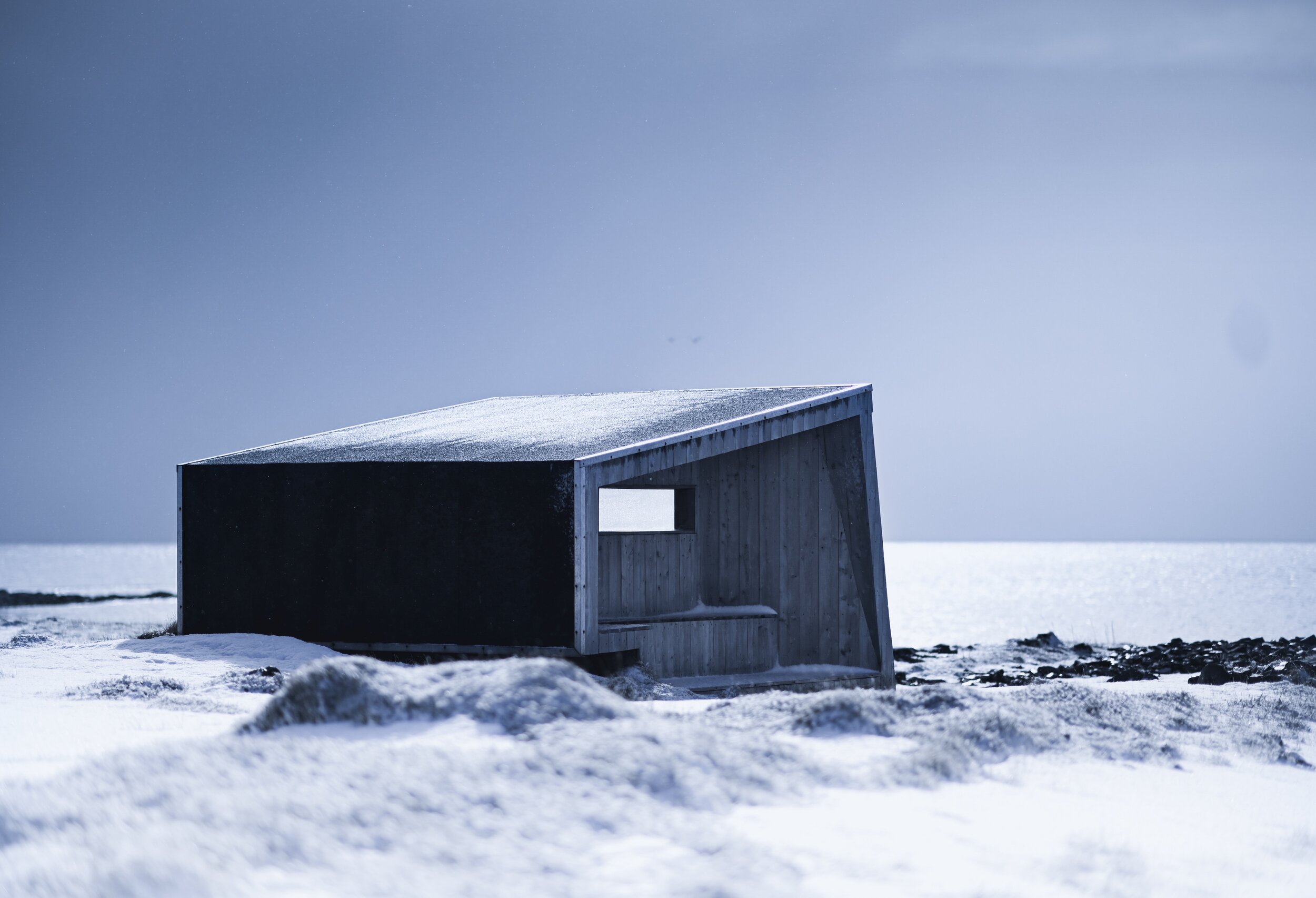
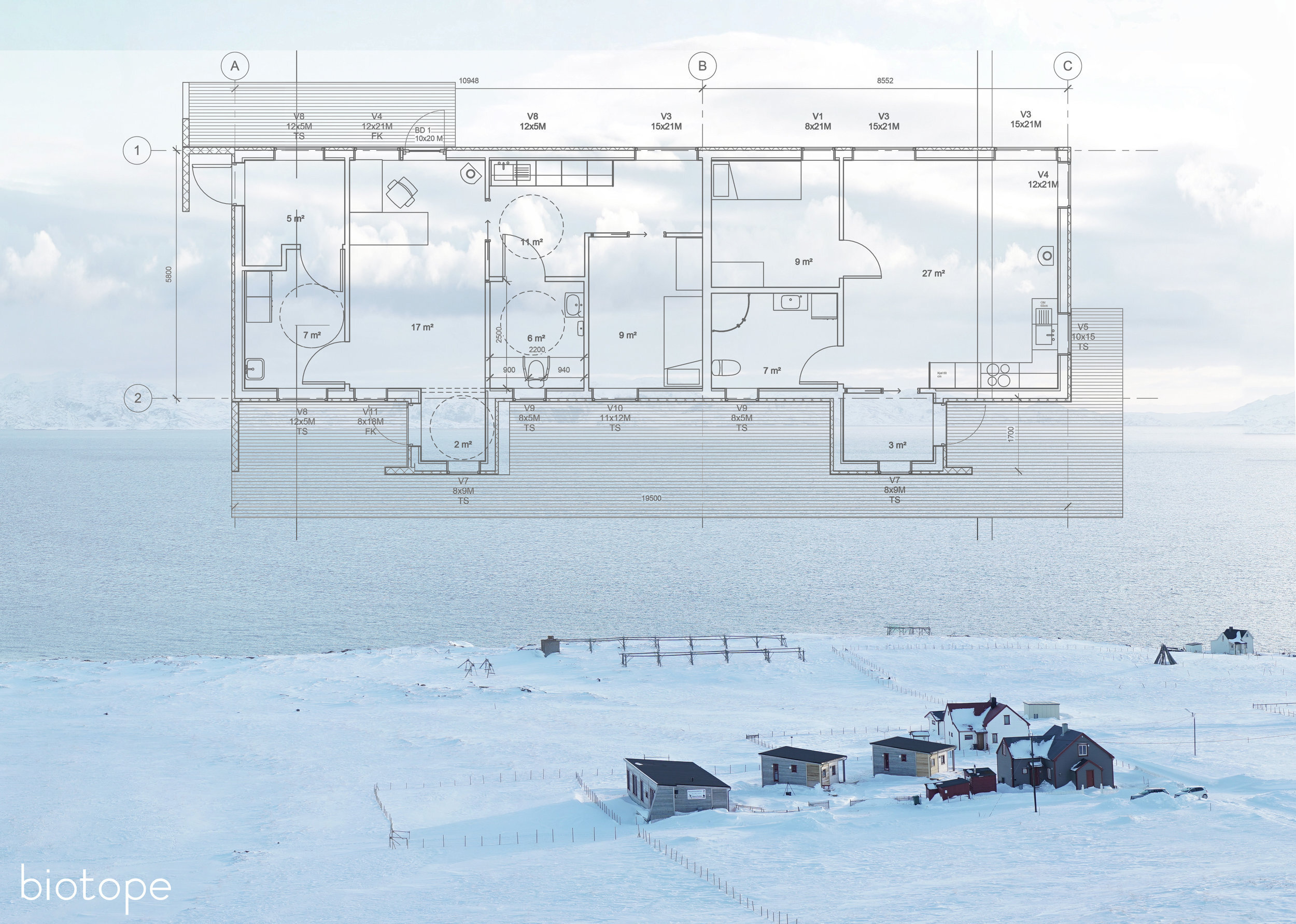
Eiders in thousands: Vardø town seen from south Bussesundet. The King Eiders favoured European wintering grounds. At Vardø southernmost point, Steilnes we have a bird hide / wind shelter. Find it in the centre of the left photo. The Biotope office is the white house in the centre of the right photo. Great views! 

Gullfest niceness
This year we are very fortunate to have artists of various kinds with us. From Tor Emil the chef at Vardø Hotel, who runs the base camp cafe in the Lavvo,  to Darren Woodhead who is painting and exhibiting during Gullfest. World class!

The Hotel is the evening base camp and this is where Gullfest artsists Ian Lewington and Darren Woodhead is exhibiting, in addition to young Varanger-photographer Skjalg-Helmer Vian. We are also enjoying a series of very interesting talks, by people who are doing groundbreaking work within the world of birding. From Cornell Lab of Ornithology´s innovative crowd sourcing birding software, presented by Jessie Barrie, to Cornelius Schlawes cutting edge thinking and analisys of Gull evolution. A wide spectre of talks. And there is more to come...

Gullfest is about birding, but great birding is made possible by great people: The good will and efforts of both local and visiting people is making this Gullfest a very enjoyable event. A true arctic adventure.

More to come from Gullfest soon! Hope you enjoy the speedy update from the Gullfest birds and people vortex! 

 Mixed Eider raft

King Eider males, 1 Common Eider female.

We still have much birding to do in Vardø before we set of to do the rest of the Varanger Fjord on monday and tuesday. More elaborate articles from Gullfest will appear later on. Thanks for tuning in to our Gullfest updates.. To be continued

Tormod A. / Biotope